Common injuries in cricket
Cricket injuries range from acute impact to chronic overuse.
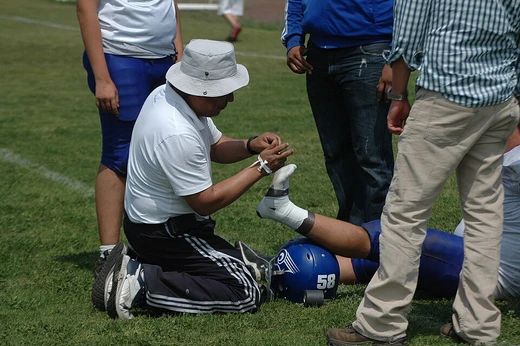
Injuries in cricket are a significant concern, particularly affecting the lower back, thighs, shoulders, and hands. They are classified as direct injuries, caused by impact with the ball, bat, or ground, or indirect injuries, resulting from repetitive movement and overuse. Fast bowlers have the highest injury prevalence rate, followed by batsmen.
- shoulder_injury_workload_threshold_lower
- varies by individual
- shoulder_injury_workload_threshold_upper
- varies by individual
Lore & Background
The most common injury location for cricketers, especially bowlers, is the back. Young bowlers frequently experience lower back pain, and continuous bowling can lead to stress fractures of the vertebra, causing significant time away from the game. Shoulder injuries often result from fielding, with overuse leading to tendinitis, supraspinatus tears, or rotator cuff degeneration. Some studies have suggested that workload may influence shoulder injury risk, but no specific delivery range has been established as a canonical threshold.
Reader's Guide
Understanding common cricket injuries is crucial for prevention and management. The back is the most frequently injured area, particularly among bowlers, with stress fractures posing a serious threat. Shoulder injuries, often from repetitive throwing in fielding, can require surgery for rotator cuff tears. Elbow injuries stem from repetitive use and poor technique, treatable with physiotherapy. Hand and wrist injuries, common in wicket keepers, are typically impact-related fractures or sprains. Knee injuries, especially patellar tendinopathy and ligament tears, frequently occur during the bowling landing stride. Foot and ankle injuries affect 11% of fast bowlers, often due to the delivery stride impact, potentially leading to bone spurs requiring surgery. These patterns highlight the need for workload management and proper technique to reduce injury risk.
Did You Know?
- Fast bowlers have the highest injury prevalence rate in cricket.
- A 2001–2002 study found bowlers averaging 123–188 deliveries per week had lower shoulder injury risk.
- 33.3% of schoolboys and 17% of A-grade players suffer from back injuries.
- David Lawrence's left patella shattered during a delivery on 10 February 1992.
Injury Classification and Role-Based Risk
Cricket injuries fall into two broad categories. Direct injuries arise when a player's body collides with the ball, the bat, or the playing surface itself. Indirect injuries, by contrast, develop gradually as repetitive motions overwork muscles and joints over time. Across the sport, the lower back, thighs, shoulders, and hands emerge as the most frequently affected areas. When researchers break down injury rates by playing role, fast bowlers consistently show the highest prevalence of problems, with batsmen following closely behind. This pattern makes intuitive sense: the bowler's delivery places enormous mechanical load on nearly every major joint, while the batsman's repeated contact with a hard leather ball at high speed creates a different but equally demanding set of stresses. Whether an injury is classified as direct or indirect often determines the treatment pathway, since impact wounds demand different medical responses than the slow, cumulative damage that overuse inflicts on tendons and ligaments.
The Shoulder, Elbow, and Hand — Upper Limb Vulnerability
The upper limb bears a heavy share of cricket's injury burden, and the mechanisms differ sharply by role. For fielders, the act of throwing the ball repeatedly during a match can inflame the biceps tendon, tear the supraspinatus tendon, or even produce degenerative changes in the rotator cuff severe enough to require surgical repair. Bowlers face a related but distinct threat: impingement, a syndrome in which irritated rotator cuff muscles compress against surrounding structures. A 2001–2002 workload study identified a sweet spot for shoulder safety, finding that bowlers averaging between 123 and 188 deliveries per week carried the lowest injury risk, while those falling below or exceeding that band were more vulnerable. Elbow problems typically stem from repetitive use combined with poor technique in both batting and bowling, producing tendon inflammation that responds to physiotherapy and targeted forearm strengthening. Hand and wrist injuries are overwhelmingly impact-related, with wicket keepers especially at risk. Finger injuries dominate this category, and treatment usually involves splinting, compression to control swelling, and careful rehabilitation to restore joint mobility before stiffness sets in.
The Back — Bowlers' Most Persistent Foe
No single body region is as consistently problematic for cricketers as the back, and the problem is most acute among bowlers. A 1995 survey by Stretch reported that 33.3 percent of schoolboys and 17 percent of A-grade players experienced back injuries, underscoring how early and widespread the issue is. A 1984 study published in the Journal of Human Movement Studies compared international bowlers who used a side-on delivery action with those who favoured a front-on action. The researchers concluded that the principal driver of back problems was a bowler's failure to achieve a proper side-on orientation during the delivery stride. For young bowlers in particular, the most common complaint is lower-back pain. Repeating the full bowling action over extended periods loads the lower-back muscle tissue beyond what it can tolerate, and in severe cases this can progress to stress fractures of the vertebrae. Such fractures carry a significant cost in lost playing time, often sidelining a promising young bowler for a considerable stretch of the season.
The Delivery Stride and Its Toll on Knees and Ankles
The landing phase of the bowling action is where the lower limb pays the steepest price. As a bowler drives through the delivery stride, the knee joint endures extreme twisting forces that can strain or even tear the collateral ligaments. Overuse of the patellar tendon is another frequent consequence, with the tendon fibres gradually breaking down in a condition known as patellar tendinopathy. The English fast bowler David Lawrence offers a stark illustration: on 10 February 1992, a single delivery caused his left patella to shatter completely, a catastrophic failure of the very structures the landing stride stresses week after week. The foot and ankle are equally vulnerable. Epidemiological research on fast bowlers shows that roughly 11 percent of their injuries involve these areas. The mechanism is the plantar flexion of the ankle as the foot plants firmly in the delivery stride, which can produce posterior impingement. Over a long career, that repeated stress may generate a bone spur, a condition that ultimately requires surgical intervention to resolve.
Gallery

Frequently Asked Questions
What body areas are most affected by cricket injuries?
The lower back is the single most commonly injured area, followed by the thighs, shoulders, and hands. These regions bear the brunt of both acute impact and the repetitive stresses of match play.
Which players in cricket are most prone to injury?
Fast bowlers consistently show the highest injury prevalence rate, with batsmen coming in second. The extreme physical demands of high-speed delivery and repetitive bowling action make this group especially vulnerable.
How common are back injuries among young cricketers?
Roughly one in three schoolboy players (33.3%) reports a back injury, a notably higher rate than the 17% seen in A-grade players. This suggests developing bodies are particularly susceptible to the repetitive loads of the sport.
What weekly delivery threshold raises shoulder injury risk for bowlers?
Crossing 123 deliveries per week is the workload point at which shoulder injury risk climbs significantly. Keeping a bowler's weekly load below that figure is a core part of injury-prevention management.
How are cricket injuries broadly classified?
They split into direct injuries, where the ball, bat, or ground causes the damage, and indirect injuries that build up through repetitive movement and overuse. Distinguishing the two helps tailor both treatment and prevention strategies.
More in Sports injuries 1-24
Spotted an error? Know more?
This is a living reference — every entry is fact-audited, and reader corrections feed straight into our audit queue. Suggest an edit · See this site's audit record